

The Glozel Tablets and the Archaeological Mystery That Divided France
In 1924, a teenage farmer in rural France uncovered mysterious clay tablets bearing symbols of an unknown alphabet, sparking one of archaeology’s fiercest controversies.
The discovery raised the possibility of a prehistoric European writing system thousands of years older than expected.
Prominent archaeologists clashed, accusations of forgery reached the courts, and scientific tests decades later reignited a mystery that divided France.
An Unexpected Discovery in a French Field
On March 1, 1924, seventeen year old Emile Fradin and his grandfather Claude were working their family’s land near Glozel in central France.
According to Fradin’s account, one of their cows became trapped when its leg sank into a concealed cavity beneath the soil. 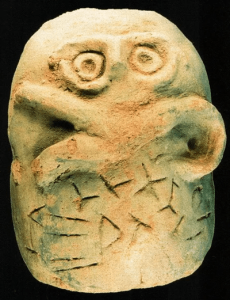
Investigating the opening, they uncovered an underground structure containing pottery fragments, bricks and other objects.
Related: Ancient Cave Paintings Depicting Strange Other Worldly Beings
The discovery attracted local attention, eventually bringing amateur investigators to the property.
In 1925, physician and amateur archaeologist Antonin Morlet began conducting more extensive excavations, convinced that the site contained evidence of an unknown prehistoric culture.
Archaeologist Salomon Reinach later described the unusual structure.
“The inner walls of that small structure were entirely vitrified by fire. It may have been a (medieval?) kiln, but that is now difficult to decide.” – Salomon Reinach, Discoveries at Glozel, Allier
Over the following eight years, more than 2,500 objects reportedly emerged from the surrounding ground.
What began as an ordinary farming accident was about to challenge established ideas about European prehistory.
The Strange Artifacts of Glozel
The discoveries included carved stones, bone needles, arrowheads, pottery vessels and unusual figurines, some depicting reindeer and human faces.
Human remains earned the excavation area the name Champ des Morts, or Field of the Dead. 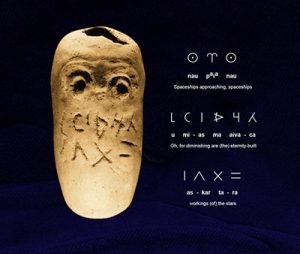
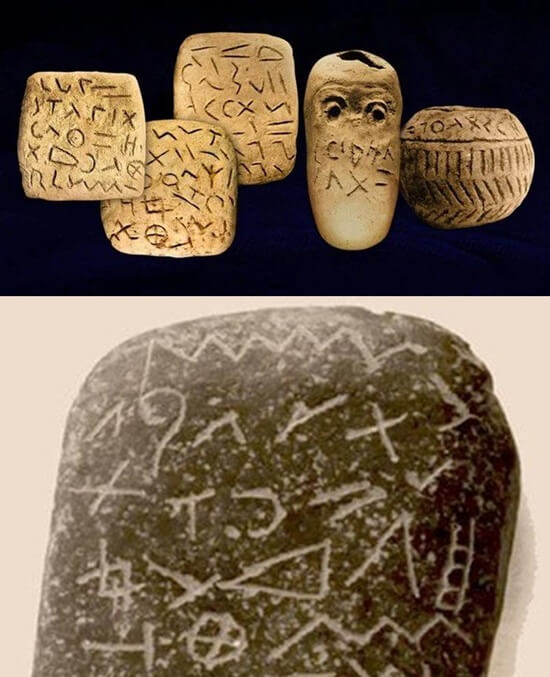
Yet the most intriguing finds were clay tablets covered in rows of mysterious symbols, some resembling ancient alphabets while others appeared entirely unfamiliar.
Swedish criminologist Harry Söderman recalled discovering one such tablet surrounded by apparently undisturbed soil.
“That old dead root seemed to me an impressive piece of evidence. What better proof of authenticity could we ask?” – Harry Söderman, The Glozel Affair
The possibility that these tablets represented an unknown prehistoric writing system transformed Glozel into an international sensation.
The Mysterious Alphabet That Could Rewrite History
The Glozel inscriptions challenged established ideas about the origins of writing, traditionally traced to Mesopotamia and Egypt around the fourth millennium BCE.
Morlet believed the tablets belonged to a prehistoric European civilization, potentially predating known Mediterranean alphabets by thousands of years.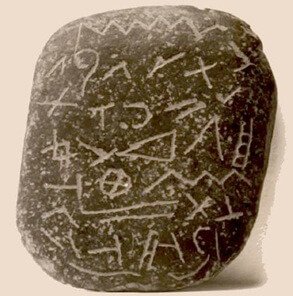
Related: Ancient Lizard Humanoid Figures
Researchers compared the mysterious symbols with Phoenician, Greek and other ancient scripts, searching for recognizable patterns and possible meanings.
Reinach believed the discoveries could rewrite the history of writing itself.
“What seemed amateurish extravagance is now very nearly proven. Two important consequences must follow, which I will condense in a few words.” – Salomon Reinach, Discoveries at Glozel, Allier
Yet no convincing decipherment emerged, leaving the supposed prehistoric language beyond reach.
The Archaeological Battle That Divided France
By 1927, the discoveries had France’s top archaeologists at loggerheads, split into Glozelians and Anti-Glozelians.
Salomon Reinach, director of the Musée des Antiquités Nationales, threw his weight behind the finds. 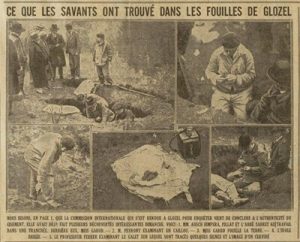
Across the divide, Louvre curator and ancient Near East specialist René Dussaud cried foul, publicly branding the supposed prehistoric alphabet a fake.
French newspapers published sensational headlines, competing experts exchanged accusations, and the public followed the controversy with growing fascination.
“Most people interested in archaeology have heard of the Piltdown skull fraud. Far fewer are aware of the Glozel controversy, which raged for much of the 20th century.” – Janice Kinory, The Glozel Controversy
Scientific authority, professional reputations and the credibility of a farming family were now at stake.
Accusations of Forgery and a Courtroom Scandal
Critics accused Émile Fradin of faking or planting artifacts, but he denied the claims and defended his discoveries.
In 1928, authorities searched his family property after a fraud complaint and seized objects for testing. 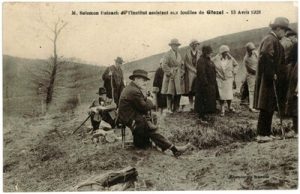
Related: The Devils Bible Codex
A 1929 ruling against him was overturned in 1931, and René Dussaud later lost a defamation case.
Suspicious engraved stones sent to Fradin’s home with a mocking note further muddied the waters.
“With the compliments of the author.” – Harry Söderman, The Glozel Affair
The incident reflected the hostility surrounding a dispute that had become deeply personal.
Fradin continued defending the discoveries throughout his life, insisting that the artifacts were authentic.
For him, Glozel had become a lifelong struggle to defend his name.
Scientific Dating Reopens the Mystery
Decades later, scientific testing gave the debate a second look.
In the 1970s, researchers used thermoluminescence dating to estimate when selected Glozel ceramics were last heated. 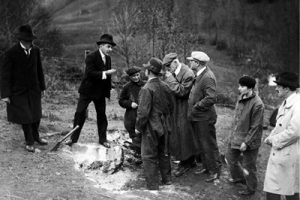
A 1974 study dated some pieces from about 700 BCE to 100 CE, which challenged the idea that every artifact was a modern fake.
Still, the dates did not support Morlet’s much older prehistoric timeline, and later tests placed other objects in the medieval and modern periods.
“Many people have worked for decades to solve the enigma of Glozel. It would be tragic to give up the attempt when we are so close to finding important answers.” – Alice Gerard, Robert Gerard and Hugh McKerrell, Scientific Testing at Glozel
Related: Mystery Of The Wide Eyed Ancient Relics
French authorities also authorized renewed investigations beginning in 1983.
A summary published in 1995 associated much of the site’s activity with the medieval period and identified evidence of questionable artifacts.
Nevertheless, conflicting dates and poorly documented early excavations continued to complicate the collection’s interpretation.
What Really Happened at Glozel?
More than a century after their discovery, the Glozel tablets remain at the center of one of archaeology’s fiercest controversies.
Their mysterious inscriptions, conflicting dates and accusations of forgery divided France’s leading scholars, leaving the collection’s true origins disputed.
Somewhere between genuine antiquities and questionable artifacts, Glozel still holds secrets buried beneath the surface.
References:
https://theconversation.com/the-glozel-affair-a-sensational-archaeological-hoax-made-science
https://www.lemonde.fr/culture/article/2007/12/26/
https://www.ina.fr/ina-eclaire-actu/glozel-l-affaire-dreyfus-de-l-archeologie