


Operation Gladio: The Secret Armies Hidden Across Europe
For decades after World War II, secret paramilitary networks existed across Western Europe.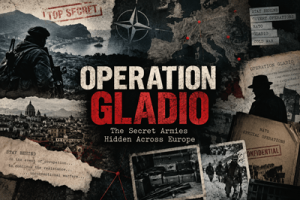
Their members trained in clandestine communications, intelligence gathering, sabotage, and guerrilla warfare.
Weapons, radios, and explosives were hidden in secret caches, while most ordinary citizens had no idea these organizations existed.
It sounds like the opening chapter of a conspiracy book, except the secret armies were real.
These organizations became known as stay behind networks, with individual countries maintaining their own branches.
The Italian network became the most famous under the codename Gladio, meaning “sword.”
Its official purpose was to prepare for a Soviet invasion, but investigators later began asking an uncomfortable question.
Did parts of this hidden Cold War infrastructure eventually turn their attention from enemies outside Italy to enemies within?
That’s where the waters start getting muddy.
Preparing for World War III
Europe emerged from World War II divided between the Soviet dominated east and Western governments increasingly aligned with the United States.
Italy occupied an especially sensitive position because the Italian Communist Party, or PCI, became one of the largest communist parties in the Western world.
Western intelligence agencies prepared for the possibility that Soviet forces might eventually move west. 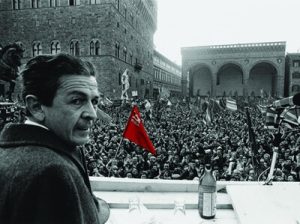
Instead of scrambling to organize resistance after an occupation had begun, clandestine networks could be built beforehand.
Related: MK Ultra Mind Control
Members received training while weapons, ammunition, explosives, and communications equipment were hidden for the day they might be needed.
In Italy, this became Gladio.
The organization wasn’t simply an emergency plan gathering dust in a filing cabinet.
Members received specialized training, while secret weapons caches known as Nasco were established around Italy.
The network remained buried beneath layers of secrecy for decades.
Then an Italian judge started pulling on the wrong thread.
The Investigation That Opened the Door
Investigating magistrate Felice Casson was reinvestigating the 1972 Peteano bombing, which killed 3 Carabinieri.
Earlier suspicion had been directed toward the left, but Casson’s investigation eventually connected the attack to neo fascist extremist Vincenzo Vinciguerra of Ordine Nuovo.
While digging through intelligence records, Casson discovered evidence of a clandestine paramilitary structure. 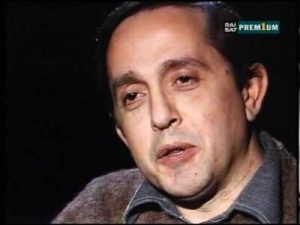
In 1990, Italian Prime Minister Giulio Andreotti formally acknowledged Gladio’s existence.
The snake was out of the bag.
Other European governments soon acknowledged that similar stay behind organizations had existed in their countries.
Something that could easily have been dismissed as conspiracy theory suddenly came with weapons caches, government admissions, parliamentary investigations, and an international paper trail.
“The structure did exist and does exist. It was intended for information, sabotage, propaganda and general resistance.” — Giulio Andreotti, statement concerning the Italian stay behind network, 1990
The question was no longer whether secret armies existed.
It was what they had actually been doing.
An Enemy Outside or an Enemy Within?
If Gladio existed exclusively to fight Soviet occupation, its creation makes sense within the Cold War climate.
Nobody needed a crystal ball to see that another European war was possible.
The controversy begins when the definition of the enemy gets blurry. 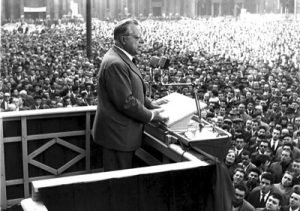
Italian investigators examined documents and relationships suggesting that portions of the security establishment weren’t worried only about Soviet troops crossing the border.
Related: Project Bluebeam Fake Alien Invasions
Communist political power inside Italy was also viewed as a potential threat.
That’s a different kettle of fish.
A secret army waiting to fight Soviet tanks is one thing.
A clandestine armed network potentially concerned with which political parties gain power through a democratic system is another.
Meanwhile, Italy was entering one of the bloodiest periods in its modern history.
The Years of Lead
Beginning in the late 1960s, Italy experienced bombings, assassinations, kidnappings, and political violence from both the extreme left and extreme right. The period became known as the Years of Lead.
On December 12, 1969, a bomb exploded at the Banca Nazionale dell’Agricoltura in Milan’s Piazza Fontana, killing 17 people and injuring dozens more.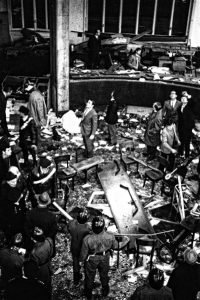
Suspicion initially fell upon anarchists, while subsequent investigations increasingly focused on neo fascist extremists.
More violence followed.
Out of this chaos emerged the controversial idea of a strategy of tension and the logic was ugly but simple.
Create enough violence and people become frightened, demand security, and suddenly stronger government authority becomes easier to sell.
The big question was whether extremist organizations were pursuing this strategy alone, or whether people inside intelligence and state institutions sometimes protected or assisted them.
Vinciguerra Drops a Bombshell
Vinciguerra became one of the most controversial figures in the Gladio story because he claimed extreme right wing terrorism operated within a much larger political environment.
His allegations went far beyond Peteano.
“There existed a real live structure, occult and hidden. This structure lies within the state itself.” — Vincenzo Vinciguerra, testimony concerning the Peteano bombing and clandestine structures
Vinciguerra described a secret anti Soviet structure involving civilians and military 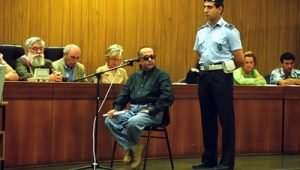 personnel, communications networks, weapons, explosives, and trained men.
He claimed that without a Soviet invasion to fight, elements of this infrastructure became concerned instead with preventing Italy from shifting politically toward the left.
That’s one hell of an accusation.
But Vinciguerra was also a convicted terrorist describing the system as he understood it.
His testimony deserves attention, but it doesn’t prove that NATO or the CIA ordered terrorist attacks against Italian civilians.
The waters were muddy enough without connecting every dot with a ruler.
Another Skeleton Falls Out of the Closet
Gladio wasn’t the only secret network operating in Cold War Italy.
In 1981, investigators uncovered the membership list of Propaganda Due, better known as P2, a secretive Masonic lodge headed by Licio Gelli. 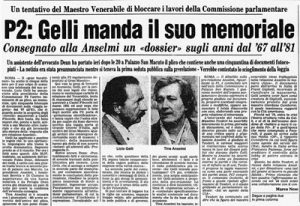
Its membership included military officers, intelligence officials, businessmen, journalists, and other influential figures.
Related: Bill Cooper The Real Mccoy Crushes Fake Info Alex Jones
P2 wasn’t Gladio, and treating them as the same organization only clouds the evidence.
But its discovery revealed something important.
Powerful networks really were operating behind closed doors.
The deeper investigators dug, the more skeletons seemed to tumble out of Italy’s Cold War closet.
Europe Starts Asking Questions
The revelations became serious enough that the European Parliament passed a resolution concerning Gladio on November 22, 1990.
Its language didn’t exactly beat around the bush. 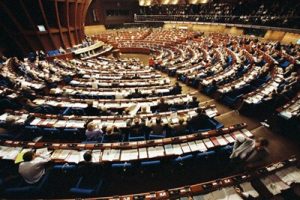
“For over 40 years this organization has eluded all democratic controls. Such clandestine networks may have interfered illegally in internal political affairs.” — European Parliament, Resolution on the Gladio Affair, November 22, 1990
The Parliament called for investigations into the clandestine networks and possible illegal political interference.
It also urged governments to dismantle secret military and paramilitary structures that weren’t subject to proper democratic control.
We’re a long way from conspiracy researchers hunched over a corkboard at 3 in the morning.
European lawmakers themselves wanted answers.
So Was Gladio Behind Terrorism?
This is where solid ground meets fog.
Gladio existed and secret weapons caches existed.
Stay behind organizations operated across multiple European countries, and Western intelligence agencies participated in their creation.
What hasn’t been conclusively established is the biggest version of the conspiracy, that Gladio operated as a centralized NATO controlled terrorist organization deliberately murdering civilians and blaming the attacks on the political left. 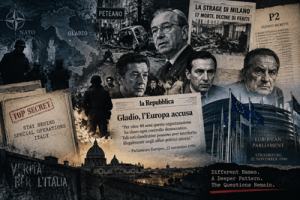
Still, the circumstantial evidence isn’t something you can simply sweep under the rug.
Extremists had relationships with people inside the security establishment. Investigations were sometimes misdirected.
Secret organizations overlapped with political and intelligence circles, while figures such as Vinciguerra claimed the violence served a larger strategy.
But overlapping circles don’t necessarily mean everybody was dancing to the same tune.
The truth may be considerably messier.
When Conspiracy Becomes History
Perhaps the strangest thing about Operation Gladio is that the documented story doesn’t need much embellishment.
Western governments really did establish secret paramilitary networks across Europe.
Operatives trained for clandestine warfare, weapons were hidden in secret caches, and much of the system remained outside public scrutiny for decades.
At the same time, Italy endured terrorism, intelligence scandals, neo fascist organizations, secret political networks, and allegations that portions of the security establishment were playing both sides of the fence.
Does that prove Gladio orchestrated the Years of Lead?
No.
But it makes asking the question perfectly reasonable.
Europe created secret armies to protect democracy from a possible Soviet invasion.
Decades later, European institutions found themselves investigating whether clandestine networks had interfered with democracy from within.
That’s one hell of a Cold War paradox.
Sometimes a conspiracy theory disappears once you turn on the lights.
References:
Parliament Resolution on the Gladio Affair