
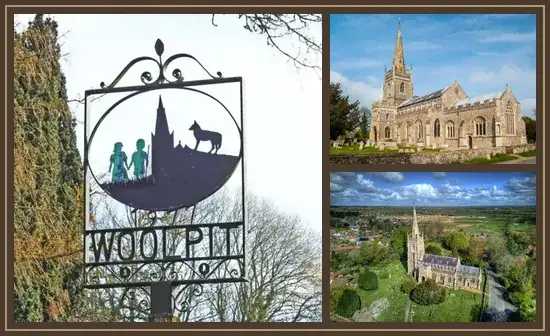

The Green Children of Woolpit and the Strange Land Where the Sun Never Rose
One summer in twelfth century England, harvesters near the Suffolk village of Woolpit watched two children climb out of the earth.
They spoke a language nobody recognized and wore clothing of a strange color and unknown material.
But it was their skin that stopped the villagers in their tracks.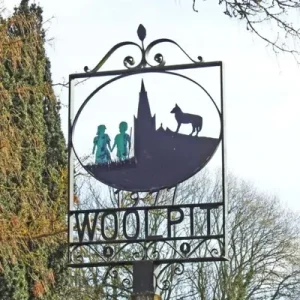
The children were green.
Who were they, and where had they come from?
Two Strangers at the Wolf Pits
Woolpit takes its name from wolf pits, deep traps baited with carrion and hidden beneath branches.
According to chronicler William of Newburgh, the children emerged beside one of these pits at harvest time during the reign of King Stephen, between 1135 and 1154.
Villagers brought the pair to Sir Richard de Calne, a local lord who sheltered them in his manor at Wykes.
Related: The Hexham Heads And The Strange Things That Followed Them Home
William, an Augustinian canon in Yorkshire, doubted the story at first, until the testimony piled up.
“overwhelmed by the weight of so many and such competent witnesses” – William of Newburgh, Historia rerum Anglicarum
The sheer number of witnesses forced him to record the tale as fact.
Decades later, abbot Ralph of Coggeshall set down his own account, naming de Calne’s household as his source.
The Children Who Would Only Eat Beans
The children refused every food offered to them, edging closer to starvation each day.
Only raw broad beans broke their fast, and for months nothing else would do.
As they slowly accepted ordinary food, the green drained from their skin.
The younger boy never recovered his strength and died around the time of their baptism.
Folklorist Katharine Briggs saw a darker meaning in the children’s diet.
“the habitual food of the children was beans, the food of the dead” – K. M. Briggs, The Fairies and the Realms of the Dead, 1970
Beans carried links to death in many ancient cultures, hinting the children had crossed over from the underworld.
Yet the surviving girl was about to reveal something even stranger.
St. Martin’s Land and the Endless Twilight
Once she learned English, the girl described a Christian homeland called St. Martin’s Land. 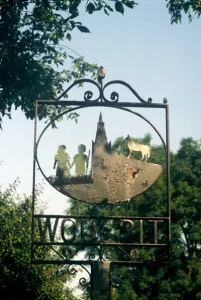
William recorded her account of a world the sun never touched.
“The sun does not rise upon our countrymen; our land is little cheered by its beams; we are contented with that twilight, which, among you, precedes the sun-rise, or follows the sun-set.” – William of Newburgh, Historia rerum Anglicarum
Across a great river, she said, lay a luminous country her people could see but never reach.
Ralph added that everything in her homeland was green.
Related: Royston Caves And The Mysterious Chamber Hidden Beneath England
In William’s version, the children were herding cattle when a sound like ringing bells swept over them, and suddenly they stood beside the wolf pits.
Ralph claimed they followed their herd into a cavern and were led out by the sound of bells.
They never found the way back.
The Girl Who Stayed Behind
The surviving girl spent years as a servant in de Calne’s household, but she never fully bent to the rules of her new world. 
Ralph’s account pulled no punches.
“rather loose and wanton in her conduct” – Ralph of Coggeshall, Chronicon Anglicanum
William painted a gentler picture, reporting that she married a man from King’s Lynn and was still alive when he wrote.
Centuries later, writer Duncan Lunan dug through de Calne family records and concluded she took the name Agnes and married royal official Richard Barre.
Today, the two green children stand hand in hand on Woolpit’s village sign.
Lost Orphans, Green Sickness or Visitors From Another World?
In 1998, researcher Paul Harris argued the children were orphans of Flemish immigrants persecuted after Henry II took the throne in 1154.
He tied St. Martin’s Land to Fornham St Martin near Bury St Edmunds, and blamed their color on chlorosis, a malnutrition disorder once called green sickness. 
Related: The Arthur’s Seat Coffins And The 17 Tiny Bodies Hidden Beneath Edinburgh
The theory soon sprang leaks, since William dated the event years earlier and an educated lord like de Calne would likely have recognized Flemish.
Historian Charles Oman suspected darker human hands at work.
“there is clearly some mystery behind it all, some story of drugging and kidnapping” – Charles Oman, Folklore, 1944
Others looked far beyond Suffolk, and in 1621 scholar Robert Burton claimed the children had fallen from heaven.
Every explanation cracks part of the riddle, yet none ties up every loose end.
The Mystery That Never Faded
William of Newburgh knew his readers might scoff at the story.
“Let every one say as he pleases, and reason on such matters according to his abilities; I feel no regret at having recorded an event so prodigious and miraculous.” – William of Newburgh, Historia rerum Anglicarum
Nearly nine centuries later, historians still cannot say whether the green children were lost orphans, a garbled folk memory or travelers from somewhere far stranger.
Whatever the truth, two green children stepped out of the earth and into history, and the land where the sun never rose has never been found.
References:
https://en.wikipedia.org/wiki/Green_children_of_Woolpit
https://dlibra.umcs.lublin.pl/Content/39499/download
https://www.historic-uk.com/CultureUK/The-Green-Children-of-Woolpit/
https://www.jstor.org/stable/jj.28460467