

The Scole Experiment and the Seances That Baffled Investigators
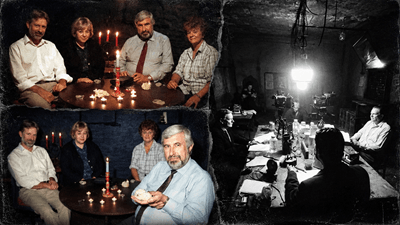
In the 1990s, a small group gathered in the cellar of a farmhouse in the English village of Scole and attempted to contact the dead.
Strange lights reportedly darted around the room, voices spoke from the darkness and objects seemed to appear from nowhere.
Even stranger, sealed rolls of photographic film developed mysterious images despite never being placed inside a camera.
It would’ve been easy to dismiss the whole thing as another séance story, except researchers from the Society for Psychical Research spent 2 years investigating the group.
After more than 20 sittings, they published hundreds of pages describing phenomena they couldn’t satisfactorily explain.
It became known as the Scole Experiment.
Something Strange in the Cellar
The experiments centered around the home of Robin and Sandra Foy in Scole, Norfolk.
Along with mediums Alan and Diana Bennett, they formed the Scole Experimental Group and claimed they’d developed a new form of physical mediumship.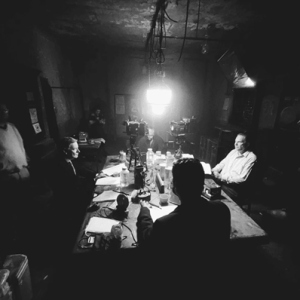
Their sessions took place almost entirely in darkness, where small lights reportedly moved around the sitters and occasionally appeared to respond intelligently.
Related: Spooky Story Of The Rosenheim Poltergeist
People described being touched by unseen hands, while objects known in spiritualism as apports sometimes appeared during sessions.
Voices were also reportedly heard communicating through the entranced mediums.
“During the investigatory sessions of 1995–1997, a great variety of phenomena were recorded.”– Society for Psychical Research
Eventually, the claims attracted researchers who wanted to see what was happening for themselves.
The Society for Psychical Research Steps In
3 experienced members of the Society for Psychical Research became the principal investigators of Scole.
They were Montague Keen, Arthur Ellison and psychologist David Fontana. 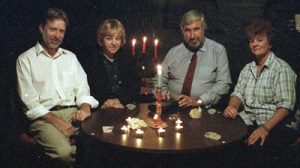
Between 1995 and 1997, they attended more than 20 sittings, sometimes accompanied by other researchers and observers.
Instead of relying entirely on stories from the participants, they personally witnessed many of the reported events.
“Most of the events described were experienced or witnessed simultaneously by at least three seasoned investigators.”– The Scole Report
The researchers repeatedly attended sessions without discovering an obvious mechanism behind the lights, voices and other phenomena.
Then the group began producing something investigators could take out of the cellar and examine.
Images Appear on Unexposed Film
The photographic experiments became one of the most fascinating parts of the investigation.
Instead of taking photographs during seances, rolls of undeveloped film were brought into the room, sometimes inside sealed containers. 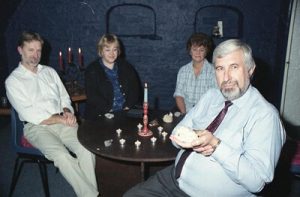
Afterward, the film was developed and reportedly contained geometric designs, symbols, writing and recognizable images.
Related: Philip Experiment, Trying To Conjure Up A Fake Ghost
One experiment on January 24, 1997, went considerably further.
Researchers Donald West and Alan Gauld placed film into secured boxes before the sitting.
One was padlocked, while another was protected by a combination known only to Gauld.
After the session, the containers reportedly showed no obvious signs of tampering.
Yet when the film was developed, one roll contained roughly 1.3 meters of drawings, symbols and writing.
Among the words was a peculiar question.
“Can you see behind the Moon?”– Photographic film produced during Scole Sitting 25
Trying to Lock Down the Evidence
Investigators understood that mysterious photographs meant little if somebody could secretly expose or switch the film, so they introduced increasingly strict controls.
Some impressive results had been produced using a wooden container known as the Alan Box, but researchers later questioned whether it could’ve been manipulated.
When investigators introduced more secure procedures, the spectacular photographic results became harder to reproduce.
David Fontana acknowledged the problem.
“Results using this protocol fell short of full satisfaction.”– David Fontana
The strongest phenomena didn’t consistently survive the strongest controls.
The Darkness Problem
Most of the phenomena occurred in darkness, making it extremely difficult to eliminate ordinary trickery.
Investigators eventually wanted infrared equipment installed so the room could be observed without visible light.
The Scole group rejected the proposal, reportedly because the supposed communicators claimed infrared would interfere with the phenomena.
Related: Computer Messages From The Past? Dodleston Messages
If investigators couldn’t see what was happening, they couldn’t completely eliminate sleight of hand or concealed equipment.
The Scole Report
In 1999, Keen, Ellison and Fontana published their findings in the Proceedings of the Society for Psychical Research. 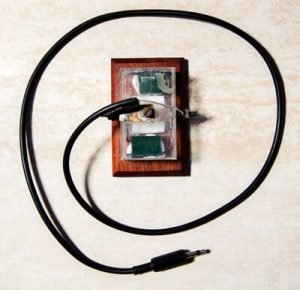
The resulting report ran more than 300 pages and included observations, experiments and criticism from other researchers.
The SPR itself didn’t officially endorse a paranormal explanation, but the principal investigators believed they’d encountered phenomena worthy of serious study.
“They encountered evidence favoring the hypothesis of intelligent forces able to influence material objects.”– The Scole Report
That didn’t establish that spirits of the dead were responsible, but it left the researchers with experiences they believed conventional explanations hadn’t adequately accounted for.
What Happened at Scole?
The Scole Experiment never produced conclusive proof of communication with the dead.
Yet experienced investigators attended more than 20 sittings without identifying how every reported phenomenon was produced.
More than 25 years after The Scole Report was published, one question still hangs in the darkness.
What exactly were they talking to?