
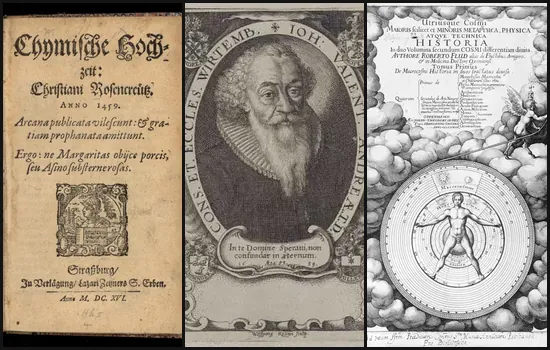

The Rosicrucian Manifestos and the Brotherhood Nobody Could Find
In 1614, an anonymous pamphlet rolled off a printing press in Kassel, Germany.
It announced a secret brotherhood of sages, hidden for almost 200 years and ready to step out of the shadows.
Scholars begged to join and critics cried heresy, but nobody could answer one question.
Where was this OG brotherhood?
A Founder Who Lived 106 Years
The pamphlet, the Fama Fraternitatis, was addressed to the scholars and rulers of Europe.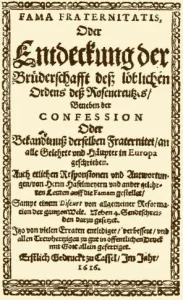
It told of Brother C.R.C., a German who traveled to Damascus and came home loaded with hidden wisdom.
When Europe brushed him off, he founded a secret order of his own.
Born in 1378, he supposedly lived to 106.
Then the brothers sealed him in a hidden vault and kept it under wraps for 120 years.
“Post CXX annos patebo” (After 120 years I shall open)… a vault “of seven sides and corners, every side five foot broad, and the height of eight foot; Although the Sun never shined in this Vault, nevertheless it was enlightened with another sun.” – Fama Fraternitatis, Thomas Vaughan translation (1652)
Related: The Corpus Hermeticum Ancient Esoteric Text About 1,900 years Ago
When the brothers finally broke through the wall, they found a seven-sided chamber with an altar, and the founder’s body was perfectly preserved.
Two More Manifestos Drop
A year later, the Confessio Fraternitatis hit the presses in Kassel and filled in the gaps the Fama had left open.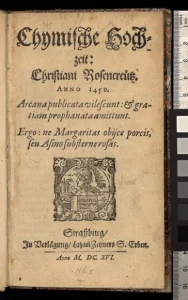
“We speak unto you by parables, but would willingly bring you to the right, simple, easy and ingenuous exposition, understanding, declaration, and knowledge of all secrets.” – Confessio Fraternitatis, Thomas Vaughan translation (1652)
In 1616 came the strangest of the three: The Chymical Wedding of Christian Rosenkreutz, printed in Strasbourg.
This one finally gave the founder a full name.
It reads like an alchemical fever dream.
An old man is invited to a royal wedding at a mysterious castle and spends seven days stumbling through bizarre trials.
The first two manifestos called for a reformation of the whole world.
This one turned the journey inward, toward the soul.
Europe Goes Hunting
The manifestos spread like wildfire.
In England, the physician Robert Fludd defended the brotherhood in print.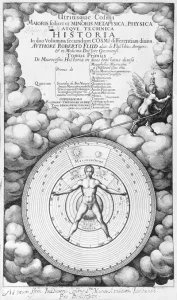
The German alchemist Michael Maier wrote a whole book on its supposed laws.
A young René Descartes went looking for them in 1619 and came up empty-handed.
Then, in 1623, Paris woke up to mysterious posters plastered across its walls.
“We, the deputies of our chief college of the Brethren of the Rosy Cross, now sojourning, visible and invisible, in this town, do teach, in the name of the Most High, towards whom the hearts of the Sages turn, every science, without either books, symbols, or signs, and we speak the language of the country in which we tarry, that we may extricate our fellow-men from error and destruction.” – Rosicrucian placard, Paris, 1623 (A.E. Waite translation)
Related: The Nag Hammadi: Ancient Esoteric Christian Text And The Lost Scripts Of Jesus
The posters claimed the brothers were walking among the city’s people, unseen.
As rumors flew, Descartes reportedly made a point of being seen all over Paris so nobody could accuse him of being one of the invisible men.
The critics hit back hard.
That same year, Gabriel Naudé published a book calling the whole thing a fraud.
So Who Actually Wrote Them?
Here’s where the plot gets thicker.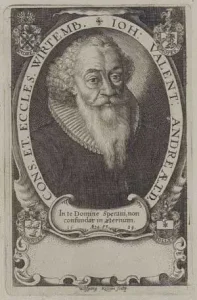
Most historians point to Johann Valentin Andreae, a young Lutheran theologian who studied at Tübingen.
He wrote an early version of the Chymical Wedding around 1605.
Years later, in his autobiography, he admitted it was his.
But he didn’t call it a sacred text.
He called it a ludibrium which is Latin for a plaything, a joke or a game.
“The Chymical Wedding, with its fruitful brood of monsters, is a ludibrium that some, surprisingly, have prized and picked apart with careful study. It is plainly worthless, and only shows how empty the curious are.” – Johann Valentin Andreae, autobiography
Case closed? Not quite jabroni’s.
Andreae never clearly claimed the Fama or the Confessio.
The historian Frances Yates argued that his “ludibrium” was closer to a staged drama with a serious message than a prank.
And nobody has ever explained how a college joke could set an entire continent on fire.
The Brotherhood That Was Everywhere and Nowhere
Rosicrucian orders still exist today, and all of them trace their roots back to three little books that may have started as a game.
Maybe the brothers were never real. Or maybe they were just good at staying invisible.
References
The Real History of the Rosicrucians, A.E. Waite (1887)
Chymische Hochzeit (Oklahoma History of Science Collections)