

The Copper Scroll Mystery and the Treasure Nobody Has Found
In 1952, archaeologists exploring a cave near Qumran discovered something unlike the other Dead Sea Scrolls.
Engraved into sheets of copper was what appeared to be an ancient treasure inventory, listing dozens of locations where huge quantities of gold, silver and valuables had supposedly been hidden nearly 2,000 years ago.
If the document was telling the truth, the directions survived but the treasure didn’t.
A Dead Sea Scroll Unlike the Others
The Copper Scroll was discovered in Qumran Cave 3 near the Dead Sea in March 1952.
Archaeologists found it badly oxidized and rolled so tightly that attempting to open it would’ve destroyed it.
Related: Nag Hammadi Ancient Gnostic Esoteric Text
The Jordan Museum describes just how unusual the artifact was.
“Most of the other Dead Sea scrolls are of a religious nature and were written on leather or papyrus. This scroll was written on metal and is not religious at all.”– The Jordan Museum
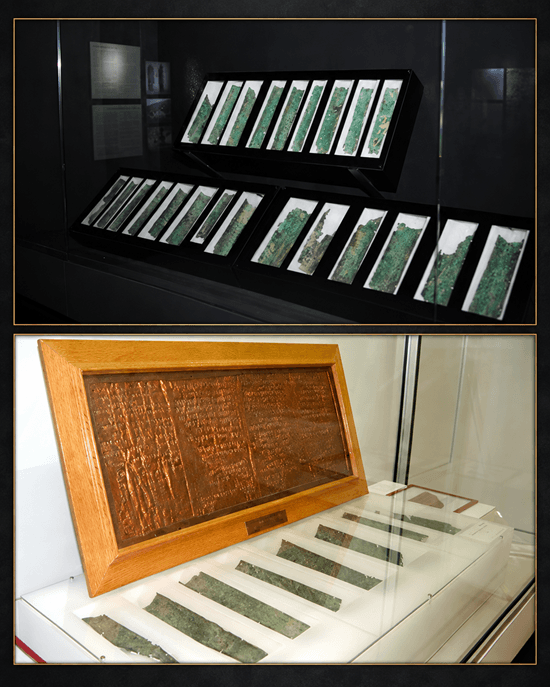
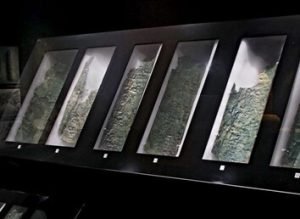
Because corrosion had made the copper dangerously brittle, researchers eventually cut it into 23 strips during 1955 and 1956 so the writing could be read.
“The wording was hammered into the copper, with each letter requiring several strikes.”– The Jordan Museum
Once researchers translated what had been hammered into the metal, the mystery only deepened.
Dozens of Places to Look
The Copper Scroll contained a list of buried caches. Scholars generally identify around 60 to 64 locations depending on how individual entries are interpreted.
The instructions describe valuables hidden beneath steps, inside underground chambers, near tombs and beside landmarks that would’ve presumably made sense to whoever was expected to retrieve them.
Scholar Joan E. Taylor summed it up simply.
“The Copper Scroll seems to contain a list of treasure.”– Joan E. Taylor, Secrets of the Copper Scroll
Nearly 2,000 years have transformed the landscape around Jerusalem, Jericho and the Dead Sea.
Related: Ancient Lizard Figurines Half Reptile Half Human
Buildings disappeared, settlements were destroyed and local names vanished, so directions that may once have been obvious can now be almost impossible to follow.
The quantities listed are enormous.
“The treasure is vast, far beyond what we could imagine would be the property of an individual or even a group, unless they were the rulers of a nation.”– Joan E. Taylor, Secrets of the Copper Scroll
If those figures are genuine, this wasn’t somebody’s personal stash.
Was It the Treasure of the Temple
That possibility has placed the Jerusalem Temple squarely in the middle of the mystery.
The Romans destroyed Jerusalem and the Second Temple in 70 CE during the First Jewish Revolt. 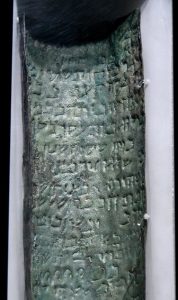
One longstanding theory proposes that priests or other custodians removed valuable objects and precious metals before they could fall into Roman hands.
Related: Osirion Mysterious Underground Chambers
Taylor argues that the scroll’s language points toward sacred wealth.
“The enormous size of the treasure, as well as the presence of cultic terminology included in the text, indicates the treasure’s sacred origin.”– Joan E. Taylor, Secrets of the Copper Scroll
She also suggests the treasure may have come from a temple.
“If we look at the Copper Scroll closely in terms of its contents, this treasure seems to come from a temple, perhaps the Temple in Jerusalem.”– Joan E. Taylor, Secrets of the Copper Scroll
The problem is that the document never actually says the treasure belonged to the Jerusalem Temple.
Other theories connect it with the Qumran community or wealth hidden during later upheavals, so the trail remains muddy.
Real Treasure or Ancient Fantasy
Not every scholar believes there was treasure at all.
Steven Weitzman noted that scholars split over whether the quantities were realistic. 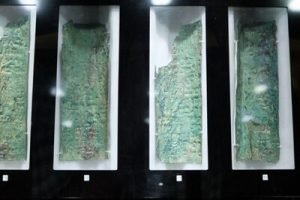
“Some scholars felt that the treasure was too large to be real and that it was a figment of its author’s imagination.”– Steven Weitzman, Harvard Theological Review
Others took the opposite view.
“Others believed the treasure to be quite plausible, probably connected to the Temple in some way.”- Steven Weitzman, Harvard Theological Review
That’s where things get sticky.
If the treasure was fictional, somebody still chose an unusually durable and labor intensive way to preserve the story.
The Biblical Archaeology Society has pointed out that the scroll appears designed to survive.
“Inscribed on durable material and hidden in a secure location, the Copper Scroll, serving as a sort of treasure map, was meant to survive.”– Biblical Archaeology Society
That doesn’t prove the treasure was real, but it makes the document harder to brush aside as an ancient tall tale.
The Search Goes On
Dead Sea Scroll researcher John Marco Allegro became one of the best known advocates of the idea that genuine treasure lay behind the document and participated in searches around the Dead Sea based on his interpretation of the clues.
Related: The Devils Bible Codex
Yet not one cache has ever been conclusively identified
“Not a single piece of treasure from the Copper Scroll has ever been located.”- Joan E. Taylor, Secrets of the Copper Scroll
The people who hid it may have returned for it, some caches might’ve been discovered centuries ago without anyone realizing their connection, or the list may have been created before the treasure was ever hidden.
A Treasure Map Without a Treasure
More than 1,800 years later, nobody knows whether the Copper Scroll’s treasure was buried, recovered, destroyed or never existed at all.
That’s what sets it apart from most treasure legends.
The map is sitting in a museum, while the treasure itself vanished.
References:
https://www.cambridge.org/core/journals/harvard-theological-review/
https://library.biblicalarchaeology.org/article/secrets-of-the-copper-scroll/
https://www.biblicalarchaeology.org/daily/biblical-artifacts/dead-sea-scrolls/